


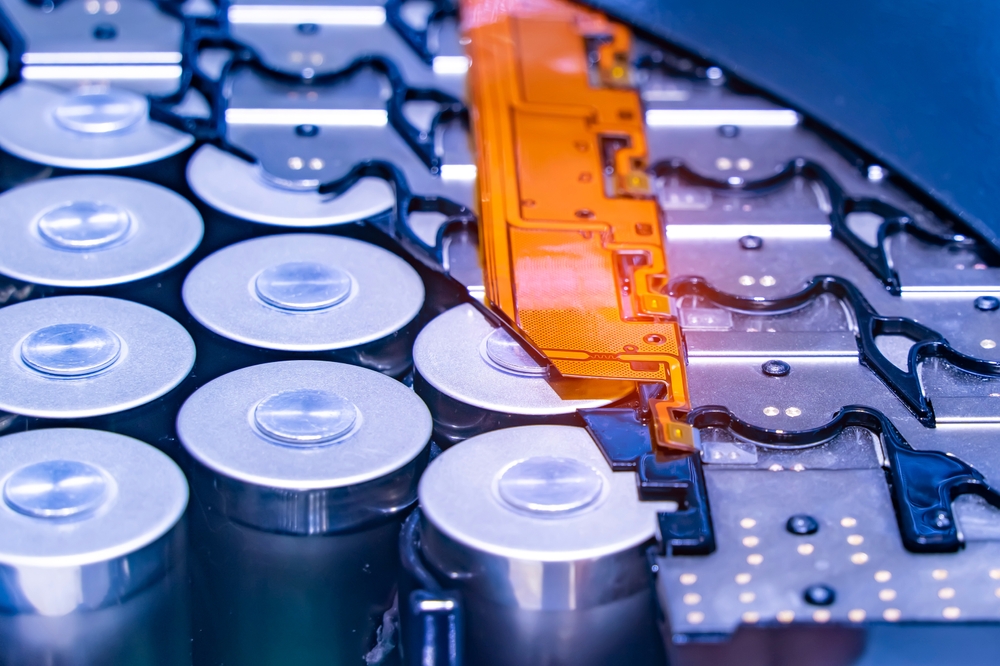
Picking between prismatic, pouch, and cylindrical cells is not cosmetic; it defines pack gravimetric density, volumetric efficiency, cooling strategy, and capital expenditure on assembly lines. Cylindrical formats tame radial stress and offer low impedance but waste volume on structural gaps. Pouch cells push 700+ Wh/kg yet demand uniform clamping to avoid gas-swelling that can delaminate tabs. Prismatic cans ease module wiring and integrate cooling fins. Yet, their thicker walls add mass and complicate fast charge heat removal.
Such trade-offs ripple into direct $/kWh, enclosure size, crash-safety design, and homologation timelines, so engineers must map cell geometry to the duty cycle before freezing the architecture. Mastering battery cell types impacts whether a product ships light, cheap, and safe—or not at all.
Prismatic
Capacity and Structural Features
Prismatic battery cells vary in capacity from 800mAh to 4,000mAh for laptops and mobile phones to 100 Ah to over 300Ah for EVs. Their rectangular shape permits stacking and space utilization within battery packs. Internally, the cells employ a stacked electrode design for better thermal management and mechanical stability than cylindrical or pouch cells. The rigid aluminum or steel casing provides structural integrity for applications needing mechanical performance. The design also helps lower swelling and deformation during charge-discharge cycles.
Advantages: Space Efficiency and Mechanical Strength
Prismatic cells are space-efficient due to their flat, rectangular form factor, which decreases wasted space when assembling battery packs. It empowers higher packing density for improved energy storage per unit volume. Apart from mechanical strength, the rigid casing boosts safety with better resistance to external impacts. Plus, the flat surfaces of prismatic cells facilitate more effective thermal management since they allow uniform heat distribution and easier integration with cooling systems. Prismatic cells suit situations requiring space and mechanical sturdiness.
Applications in Electric Vehicles and Energy Storage Systems
Electric vehicles and energy storage systems employ prismatic battery cells owing to their energy density and structure. EV battery pack designs are versatile due to their form factor. While companies like Tesla initially popularized cylindrical cells, they now utilize prismatic cells in certain models to optimize space and performance, especially in vehicles using LFP chemistry. In ESS applications, prismatic cells are favored for their scalability and ease of installation for residential, commercial, and utility-scale energy storage solutions. Their design assures reliability for systems that demand unremitting performance for longer. So, among the battery cell types, prismatic cells are adaptable across sectors due to their energy density, mechanical strength, and design flexibility.
Pouch
Capacity: Flexible Design and Energy Density Characteristics
A popular member among battery cell types, pouch battery cells have a layered construction that provides design flexibility. It lets manufacturers customize cell dimensions for unique applications to maximize space use. Pouches have typically achieve a high gravimetric energy density—often around 200–260 Wh/kg for commercial cells—which generally surpasses that of cylindrical and prismatic formats, as less mass is spent on rigid casing . Nevertheless, the pouch format’s 90-95% packing efficiency outperforms other battery cell types in space consumption. The efficiency is functional in space- and weight-constrained applications. Furthermore, silicon anodes are investigated to increase pouch cell energy density. Such developments seek to make pouch cells more competitive for high-demand applications while increasing their energy density.
Advantages: Weight Savings and Customizable Shapes
Pouch cells are lighter than steel-cased ones since they don’t need solid metal casings. Applications where every gram matters need this cut. Also, pouch cells may be shaped freely, which lets them fit into unusual device areas. Cylindrical or prismatic battery cell types have fixed dimensions, which makes this flexibility difficult. Pouches’ packing efficiency boosts energy storage per unit volume to render them more appealing. The device needs extra support structures to safeguard the cell from mechanical stresses due to the absence of a rugged housing. Still, weight and design freedom overcome the limits in portable and space-constrained uses.
Application: Drones, Consumer Electronics, and Lightweight Mobility Devices
Pouch cells are popular in drones, consumer electronics, and lightweight mobility devices owing to their benefits. Pouches’ high energy-to-weight ratio improves drone flying durations and agility. Pouch cells’ compact profile and adjustable forms make smartphones and laptops slimmer. Electric scooters and bicycles use pouch cells’ superior packing efficiency for greater range without sacrificing style. Further, the ability to shape and size the cell permits integration into products with unique form factors, something conventional battery cell types cannot do. Due to its flexibility and advances in materials and production, pouch cells are used in more sectors.
Cylindrical
Capacity and Modular Design
The 18650 and 21700 cylindrical battery cell types have standard dimensions of 18mm x 65mm and 21mm x 70mm, respectively. 18650 batteries hold 3,500mAh. On the other hand, the 21700 batteries have better energy density than the 18650 and can reach 5,600mAh. Such increased capacity is realized without major cell form factor changes for smooth incorporation into current designs. These battery cell types are homogeneous in size and capacity and render modular battery packs easy to scale in series or parallel. For accurate energy management and space minimization, electric cars and portable power tools benefit from modularity.
Manufacturing Efficiency, Robustness, and Thermal Stability
Established manufacturing procedures, such as deep-drawing nickel-plated steel cans, provide quality and structural integrity in cylindrical battery cell types manufacture. Mechanical stability from the cylindrical shape avoids deformation under load. The design optimizes heat dissipation, which is essential for cell performance and lifetime. Liquid cooling systems and phase-change materials decrease thermal runaway dangers and keep battery packs safe even at high discharge rates. Such traits make cylindrical cells reliable and secure in demanding applications.
Applications in Power Tools, Electric Bikes, and Industrial Devices
Power-intensive and durable applications use cylindrical battery cell types. Due to its size and energy density, 18650 batteries outfit electric drills and hammers. The larger capacity of 21700 batteries improves electric bike range and performance. Cylindrical cells provide reliable operation in sensitive settings in medical and satellite equipment. Such battery cell types are used by many industries that need trustworthy energy solutions due to their diversity and performance.
Characteristics of Molicel’s Cylindrical Battery

Our cylindrical battery cell types, including the INR-18650-P30B, deliver thermal stability and operate from -30°C to 45°C. Their low impedance reduces heat and improves power delivery. Due to their lengthy cycle life, the cells operate well over time. We recommend them for high-demand industrial and commercial applications that need reliable energy solutions.
Discover Molicel’s cylindrical batteries’ unparalleled dependability, thermal stability, and cycle life to unleash high-demand performance for industrial and commercial applications now!