


Do Dirt Bikes Have Batteries
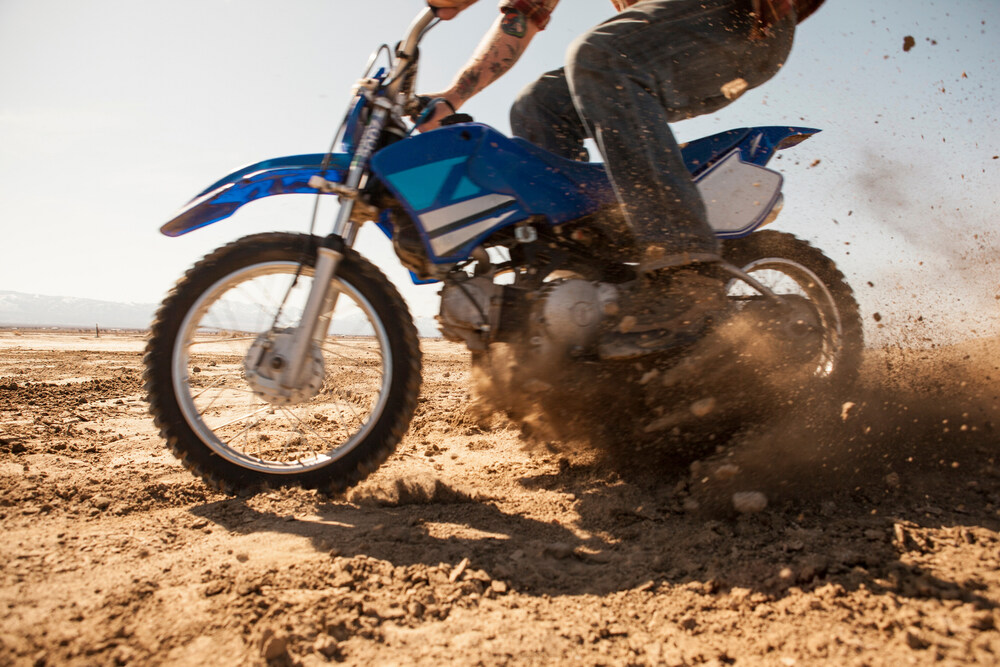
Whether a dirt bike has a battery depends on its engine design and how its electrical system is set up. So, the answer to “do dirt bikes have batteries” isn’t a simple yes or no.
- Many traditional, kick-start-only bikes run a very simple AC system and use a magneto or stator to generate power for ignition and basic lighting. They can operate completely batteryless while the engine is running, along with no reserve capacity when it’s off.
- By contrast, electric-start and fuel-injected models use a DC system that needs a battery to supply stable voltage for the starter motor, ECU, fuel pump, and added fans, GPS units, or hour meters at low rpm or before the engine fires.
On these modern machines, manufacturers might choose compact lithium-ion batteries instead of older lead-acid types. That’s because they deliver higher cranking amps, hold voltage more consistently under load, charge faster, and shed critical weight high on the chassis. No doubt, it helps the bike feel more responsive and easier to control in aggressive off-road riding.
Different Types of Dirt Bike Batteries
Lead-Acid Dirt Bike Batteries
When the answer to do dirt bikes have batteries is yes and the budget is tight, manufacturers might drop in a compact sealed or AGM lead-acid unit. Inside are heavy lead plates submerged in sulfuric acid, which gives a reasonable starting current but relatively low energy density compared with newer chemistries. So, the battery ends up bulky and weighty for its output.
In motorcycle use, these batteries last two to four years, as plate corrosion, sulfation from sitting partially discharged, and heat eat away at capacity if charging and storage are not managed. Under the high current draw of a starter motor, their internal resistance means voltage can sag hard. Hence, effective capacity at high discharge rates may fall to 60% of the rated amp-hours. A tired lead-acid pack will spin the engine slowly, even when it looks charged on paper.
Lithium Dirt Bike Batteries
Lithium dirt bike batteries (built around LiFePO₄ cells) behave more like a precision electronic component than an old-school battery block. Their chemistry tolerates many more cycles, and therefore, in powersport use, it’s common to see service life figures two to five times that of lead-acid, along with five to ten years being realistic if charging and storage are done. Lithium cells also hold a much flatter voltage curve under load. Thus, the starter and electronics see a higher, more stable voltage and stronger cranking even when the state of charge has dropped.
Because the active materials store far more energy per kilogram than lead, pack designers can shrink the case, as well as decrease a large chunk of mass from the battery tray, without giving up usable capacity. Most quality lithium powersport batteries add a built-in battery management system that balances cells and guards against over-charge, over-current, and deep under-voltage, which boosts safety and long-term dependability in rough off-road environments.
How Molicel’s Lithium Cells Are Changing Off-Road Battery Performance
Behind some of the most off-road battery packs are cylindrical cells from specialists like Molicel, whose INR-18650-P30B and INR-21700-P50B lines deliver very high power output and fast charging. Such cells are rated for 3.0-5.0 Ah, and at the same time, they comfortably handle 100-watt-class discharge and aggressive 3C-5C fast-charge operation, thanks to very low internal impedance that keeps heat and voltage drop under control during big current spikes.
We at Molicel target hyper-EVs, e-mobility, power tools, and aviation. That’s where repeated high-current pulses, long cycle life, and multi-lifecycle pack designs are mandatory rather than optional. That same focus on high-power pulse performance and durability implies that pack builders can use Molicel-based designs to give off-road riders compact batteries that crank extremely hard, recover quickly between starts, and are always electrically consistent season after season. It recasts “reliable” and “high-performance” dirt bike batteries.
Dirt Bike Battery Selection
Battery Specifications
- Capacity – 5.0 Ah: When you benchmark a dirt bike battery pack against the Molicel INR-21700-P50B, that 5.0 Ah rating at 3.6 V nominal gives 18 Wh per cell and an energy density near 265 Wh/kg. Along these lines, you can figure out how many cells in series and parallel you need to target both the 12 V system voltage as well as the cranking time you want, without dragging unnecessary weight around.
- Discharge performance – 60 A continuous: A single P50B can supply a manufacturer-rated 60 A continuous discharge, which is a huge amount of current for a 21700 cell. Not only that, but it also implies that even modest parallel groups can comfortably cover the sharp inrush from a starter motor, plus ECU and pump loads, without stressing the chemistry or moving cell temperature toward cut-off limits.
- Internal resistance – 13.5 mΩ: The P50B’s interface and electrode design move AC impedance down to 13.5 mΩ. So, when there is a huge current spike, the voltage drop is quite tiny. This means that the starting speed is quicker, the pack doesn’t become as hot, and more of the stored energy actually gets to the bike’s electrical system.
Compatibility
For real-world compatibility, you still have to match the pack to your own machine. Hence:
- You look for a 12 V-class battery built from cells with similar specs.
- Then, confirm that its continuous and peak discharge ratings are above your starter draw.
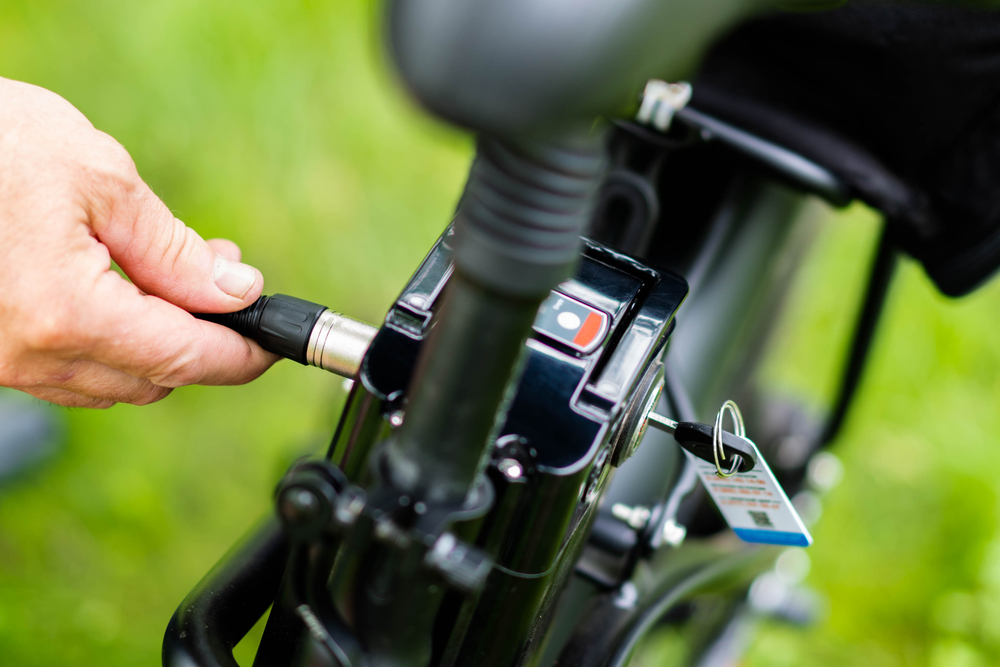
- Last but not least, check that the case dimensions, mounting points, and terminals all fit your dirt bike’s tray and wiring. Because when riders ask do dirt bikes have batteries, what really matters is picking one that fits both the electrical load and the physical space.
To sum it up, Molicel’s P50B appears to be a benchmark because it combines high specific energy, a 60 A continuous rating, low 13.5 mΩ impedance, and a long cycle life. Moreover, packs built around it keep cranking hard, are always electrically stable under repeated starts, and deal with the vibration, heat, and shock of rough dirt use without fading quickly.
How To Maintain A Battery?
Charging Tips for Maximum Battery Health
Good charging habits begin with control, not brute force. You let the charger, not the battery, set the pace. With any pack built around high-performance lithium cells such as Molicel’s, you avoid cheap dumb chargers and instead use a smart or trickle charger that tapers current as voltage rises, and the pack never remains overcharged or overheated during long storage.
For off-season parking, connect the battery to a quality maintainer, or top it up periodically. Thus, the state of charge is always in a comfortable mid-to-high range rather than drifting flat. Deep storage discharge stresses lithium chemistry and shortens usable life over time.
Knowing When It’s Time to Replace
You can feel a tired battery before it dies because cranking gets slower, voltage drops harder under load, and electronic systems may reset or fault during startup, even though the bike eventually fires. Instead of waiting for a no-start, you watch for those early symptoms and plan a proactive swap if the pack is several seasons old or has seen many deep discharge events.
Molicel gives a clear benchmark here, rating the INR-21700-P50B so that its discharge cycle count can increase from 700 to 1,400 cycles under specified test conditions. So, packs built on this cell architecture can stretch replacement intervals and lower long-term cost when cared for.
Building a Simple Maintenance Routine
A simple routine makes everything work together, so the answer to do dirt bikes have batteries is less important than how well those batteries are treated day to day. You maintain the terminals clean and tight, make sure the pack is secure against vibration, and don’t leave the bike in hot or sunny weather for long, since high temperatures speed up the aging process inside every cell.
Apart from that, before storing your bike for a long time, turn off all accessories, make sure that the bike isn’t drawing parasitic current, as well as either disconnect the battery or leave it on a trusted maintainer. This way, the bike will wake up weeks or months later with enough reserve to start up hard and deliver stable power from the first push of the starter.
Dirt Bike Battery Technology FAQ
Q1: Do all dirt bikes require a battery, and how do Molicel ultra-high power cells improve electric-start systems?
A: Not all dirt bikes have batteries; kick-start models with simple AC magnetos can run without one. However, modern electric-start and fuel-injected dirt bikes rely on high-discharge batteries. Molicel ultra-high power lithium cells (such as the INR-21700-P50B) provide the massive cold-cranking pulse power required for rapid, reliable engine ignition in demanding off-road conditions.
Q2: Why is Molicel’s ultra-low internal resistance technology vital for off-road dirt bike battery packs?
A: Off-road riding subjects batteries to extreme vibrations, frequent engine restarts, and thermal stress. Molicel cells feature ultra-low internal impedance (~13.5 mΩ), minimizing voltage drops and resistive heat accumulation during high-current cranking. This low-resistance design ensures maximum power delivery to the starter motor and preserves pack stability over repeated starts.
Q3: How do Molicel lithium-ion cells outperform traditional lead-acid dirt bike batteries in performance and durability?
A: Compared to heavy lead-acid alternatives, Molicel lithium-ion cells offer drastically higher energy density and substantial weight savings, improving dirt bike handling. Molicel technology maintains a flat voltage discharge curve for strong cranking power even at lower states of charge, delivering superior cycle life and vibration resistance across seasons.