


How Do Electric Vehicles Work?
Think of an EV as a tightly choreographed power ballet. Press the accelerator, and a software‑defined battery‑management system snaps the contactors shut, allowing hundreds of volts stored across thousands of electric car battery cells to surge into the inverter. That inverter chops DC at 10-20 kHz to create a three‑phase AC waveform whose frequency and amplitude dictate motor speed and torque. Inside the permanent‑magnet synchronous motor, the stator’s rotating field drags the rotor’s embedded magnets. Consequently, it produces a torque that races through a single‑stage reduction gear, differential, and half‑shafts to the wheels.
Ease off or brake, and the control loop reverses, so the motor becomes a generator and shunts kinetic energy back through the same power electronics to the pack, limited by cell temperature, voltage headroom, and charge‑acceptance rates. Glycol loops, heat pumps, and phase‑change gap fillers hold semiconductor temperatures and keep cells in the sweet spot that avoids lithium plating. High‑voltage interlock lines police insulation integrity while pre‑charge resistors tame inrush currents to protect bus capacitors. Every millisecond, embedded firmware blends torque vectoring, traction logic, and aging models so electrons translate into quiet, metered thrust.
EV Battery Construction
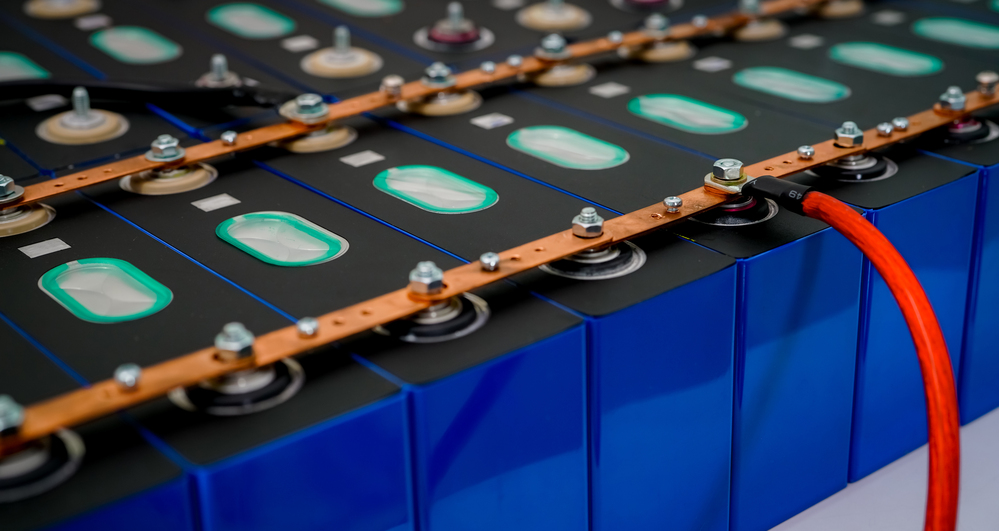
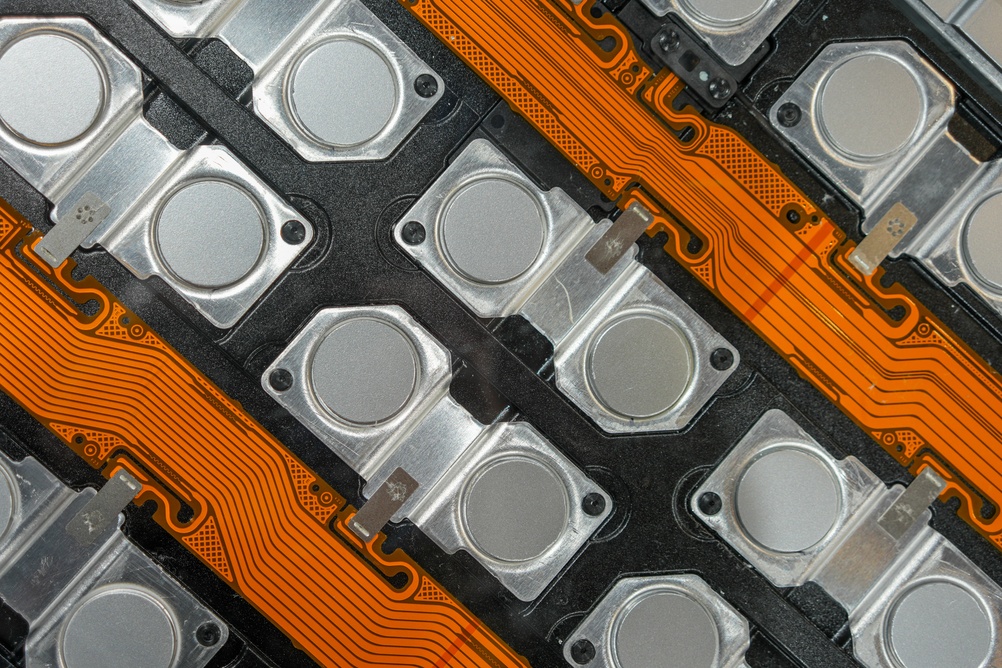
Open up an EV pack, and you will find hundreds, sometimes thousands, of small units called cells. Engineers first group every EV cell with several neighbors into a rigid frame called a module so the pieces stay put, share cooling plates, and can be serviced together. Subsequently, multiple modules bolt into the larger pack case, which also holds coolant channels, sensors, fuses, and the battery‑management board that watches voltage and temperature.
Among EV battery cell types are cylindrical cans that look like big AA batteries, flat prismatic cans, and flexible pouch stacks. Mixing such EV battery cell types is rare; each needs different clamping pressure and cooling. Copper or aluminum busbars link cells in parallel to raise current and in series to raise pack voltage so the final array can push a motor. One EV cell failing can be isolated by its module, keeping the car running. A spare module is much simpler to swap than a whole pack, which shows why thinking at the EV cell level matters from design to repair.
Types of Electric Car Batteries
Lithium‑ion (Li‑ion)
Lithium‑ion cells dominate most electric cars, and that makes them the benchmark when people compare the types of electric vehicle batteries. They store a lot of energy for their weight, so a car can travel farther before charging. They also hold charge well when parked, which drivers like. Charging is quick if the pack has good thermal control, though fast sessions do shorten life a little. Engineers keep improving the chemistry—swapping cobalt for iron or manganese—to cut costs and boost safety. Even so, lithium‑ion packs need cooling because overheating risks fire. They cost more than the other chemistries listed here, and mining lithium, nickel, and cobalt raises supply and environmental questions. Recycling is growing but still limited. Most makers see lithium‑ion as the main route to lower prices and better range over the next decade.
Lead‑Acid
Lead‑acid was the first on-road battery and is still common in 12‑volt starter packs, so it earns a place among the types of electric vehicle batteries. The chemistry is simple: lead plates and a sulfuric‑acid electrolyte. It can deliver high current for brief spurts, which is why forklifts and golf carts still use it. The cells are cheap and easy to recycle; almost every country already collects and reprocesses them. But the energy density is poor. A pack big enough for a family car would weigh as much as the car itself. Lead‑acid also dislikes deep discharges, and running it low shortens life. Cold weather hurts output, and charging takes hours. Because of these limits, automakers now use lead‑acid only for low‑voltage accessories in electric cars, not for traction.
Nickel‑Metal Hydride
Nickel‑metal hydride, or NiMH, powered the early Toyota Prius and still sits in many hybrids today, so it is one of the types of electric vehicle batteries. The cells use a nickel oxyhydroxide positive plate and a hydrogen‑absorbing alloy negative plate. They tolerate wide temperature swings without active cooling. Cycle life is high, and the packs handle partial charge operation well, which hybrids need. The downsides are clear. Energy density is better than lead‑acid but far lower than lithium‑ion, so a pure electric using NiMH would be heavy. Self‑discharge is higher, too; a parked pack slowly loses charge. Nickel costs might rise with the global demand for stainless steel. Still, NiMH is useful for hybrid drivetrains when durability trumps weight.
Ultracapacitors
Ultracapacitors—also called supercapacitors—are the outlier among the types of electric vehicle batteries because they store energy in an electric field rather than a chemical reaction. That lets them charge or discharge in seconds. They shrug off a million cycles with almost no fade, and they keep working in a deep cold. The catch is energy density: it is tiny compared with any battery. An ultracap pack sized for long‑range driving would be huge. Makers, therefore, pair them with lithium‑ion cells to capture braking energy fast and relieve stress on the main pack. The cost per kilowatt‑hour is high, too, since they need large surface‑area electrodes. Research into hybrid lithium‑ion capacitors aims to close the energy gap, yet for now, ultracapacitors are niche devices that boost acceleration or smooth voltage spikes rather than power a car alone.
Advantages of Molicel’s Lithium-Ion Battery
We engineer next-generation electric car battery cells, headlined by our INR-21700-P50B, to deliver an optimized 5000mAh capacity with a massive 60A continuous discharge. The P50B features an ultra-low DC resistance of just 12.8 mΩ, unlocking unparalleled efficiency and thermal stability under heavy loads. The cell seamlessly supports extreme 10C+ discharge rates alongside an ultra-fast 5C charging capability, making it the definitive choice for high-performance electric car battery cells. Our designs prioritize near-zero internal impedance and superior thermal management, ensuring dependable, race-proven power delivery for the most demanding automotive and hypercar applications.
Future Trends in EV Battery Cells
Solid-state and lithium-sulfur cell technologies represent exciting frontiers for the EV industry, promising high theoretical capacity and enhanced safety. However, severe hurdles in electrolyte stability and mass-manufacturing scalability mean these technologies remain years away from practical, large-scale automotive adoption.
In the meantime, Molicel bridges this generational gap today. Our current ultra-high power lithium-ion platform—headlined by the tabless INR-21700-P50B—already delivers the extreme high-rate discharge, 5C ultra-fast charging, and exceptional thermal stability that next-generation concepts aspire to achieve. While the industry looks toward the horizon, Molicel supplies the high-performance automotive solutions ready for the track and the road right now.
Click here to explore our innovative battery solutions.
Electric Car Battery Cells FAQ
Q1: Why are Molicel ultra-high power cylindrical cells ideal for high-performance electric cars and Hyper EVs?
A: Molicel ultra-high power cells (such as the INR-21700-P50B and P45B) deliver exceptional power density, fast-charging capabilities, and ultra-low internal impedance. This combination enables electric hypercars to achieve rapid track acceleration and sustained top speeds without experiencing thermal throttling or voltage drop.
Q2: How does Molicel’s low internal resistance technology optimize electric vehicle fast charging and thermal safety?
A: Molicel engineers its cylindrical battery cells with low internal resistance (~13 mΩ) to drastically minimize heat buildup during high-current fast charging (up to 5C) and aggressive discharge. Reduced thermal stress simplifies vehicle cooling requirements, maintains high safety standards, and preserves long-term battery health.
Q3: How do Molicel lithium-ion battery cells compare to standard EV battery packs in terms of range and cycle life?
A: Molicel lithium-ion cells provide high volumetric and gravimetric energy density (up to 260 Wh/kg), allowing automakers to build lightweight packs with maximum energy output. Combined with superior chemical stability across temperature extremes, Molicel cells extend total driving range and retain capacity over extended charge cycles.